A fake Kraken mirror can be designed specifically to capture login credentials. The key danger is that the page may look almost identical to the real exchange, while the information entered into it goes to someone else. 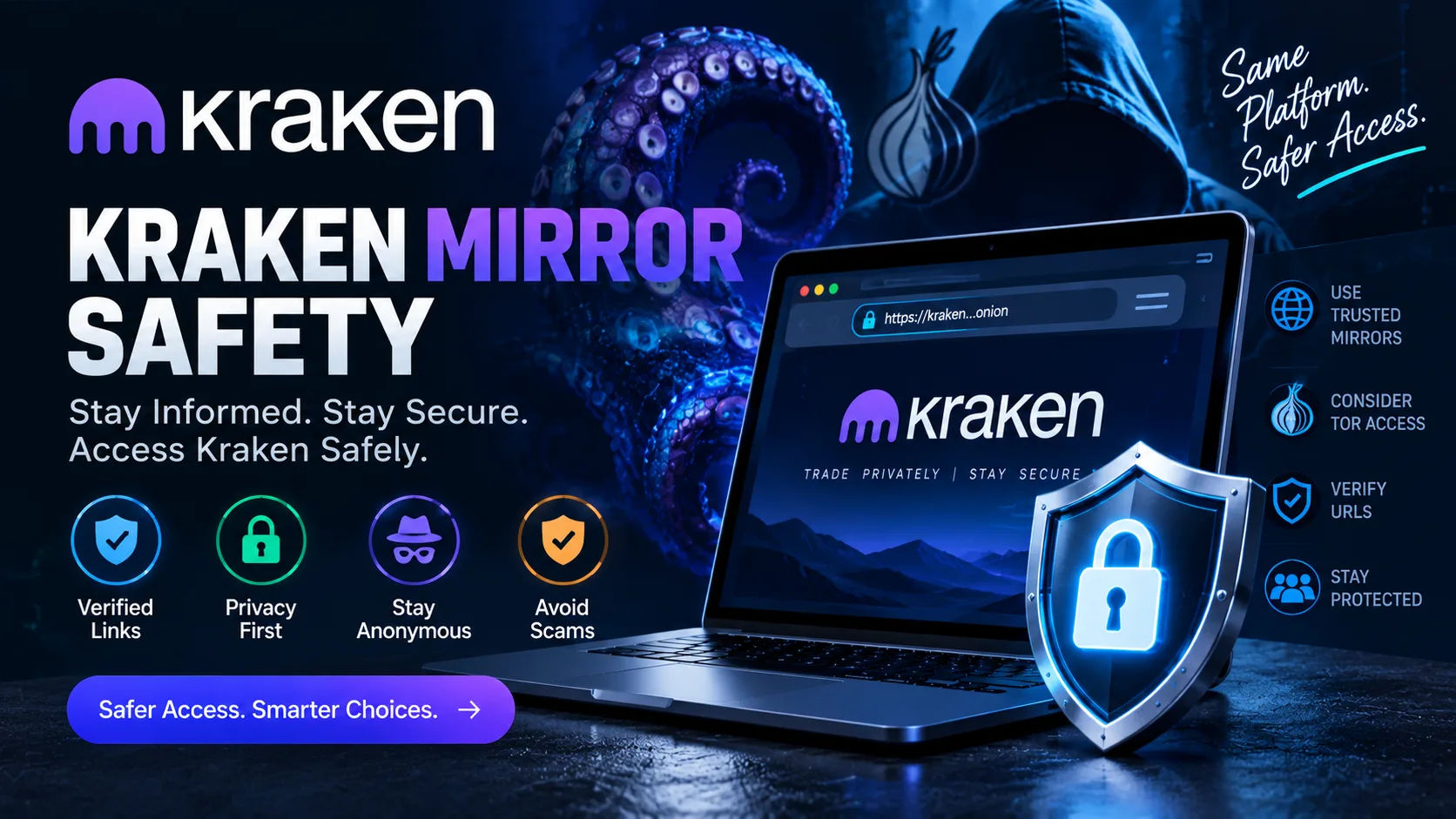 This is why understanding Kraken mirror safety поддельное зеркало Kraken matters before entering a username, password, verification code, or other account information on a site that claims to be Kraken.
Can a Kraken Fake Mirror Steal Login Data?
Yes. A fake Kraken mirror can steal login data if it is controlled by a phishing operator and is built to collect information entered by visitors.
The term “mirror” can be confusing because a legitimate mirror can simply mean a duplicate or alternative copy of something. In cryptocurrency scams, however, a “fake mirror” commonly refers to a fraudulent website that imitates a legitimate platform. The goal is often to make users believe they are logging into their real Kraken account.
The visual imitation can be surprisingly convincing. Attackers may copy the general layout, colors, buttons, login forms, and wording associated with the genuine website. A person who is checking the page quickly may not immediately notice anything unusual.
The most important point is simple: Kraken mirror safety поддельное зеркало Kraken depends heavily on verifying the website before entering sensitive information.
How a Fake Mirror Can Capture Login Information
A phishing mirror does not necessarily need to break into Kraken's systems. Instead, it can trick the user into voluntarily submitting the information.
Imagine that you receive a message saying there is a security problem with your Kraken account. The message contains a link and tells you to log in immediately.
You click the link.
The website looks familiar.
You enter your email address and password.
Instead of sending those credentials to Kraken, the fraudulent page sends them to the attacker.
The attacker may then attempt to use those credentials against the real service.
This is one of the basic mechanisms behind credential phishing.
Fake Login Forms
The simplest approach is a copied login form.
The page may contain fields such as:
- Email or username
- Password
- Two-factor authentication code
- Security verification
- Recovery information
When the victim submits the form, the information can be transmitted to infrastructure controlled by the attacker.
The page may then redirect the victim to the legitimate Kraken website. This can make the incident even harder to recognize.
The victim might think the first login simply failed or that the website experienced a temporary problem.
Real-Time Credential Theft
Some sophisticated phishing pages can go beyond simply storing credentials.
They may attempt to relay information in real time. For example, after receiving a username and password, the attacker may immediately attempt to use those credentials elsewhere.
If the victim also provides a temporary verification code, the attacker may try to use that code before it expires.
This is why entering a verification code into a suspicious website is dangerous even when the password itself is strong.
Why Fake Mirrors Can Look So Convincing
People often assume they can identify a phishing site because it will look poorly designed.
That is no longer a reliable assumption.
Attackers can reproduce the appearance of popular websites quite closely. They can also use professional-looking graphics, familiar terminology, and polished layouts.
Some fraudulent pages are intentionally kept simple because simplicity makes them look believable.
The visual appearance of a website therefore should not be treated as proof that the website is genuine.
Familiar Branding Is Not Proof
Seeing the Kraken name or logo does not prove that the website belongs to Kraken.
A website can display almost any company's branding.
The same applies to security messages, support badges, account warnings, and statements claiming that a page is “official.”
What matters is where the website actually takes you and whether you reached it through a trustworthy route.
HTTPS Does Not Automatically Mean Legitimate
Another common misunderstanding involves the padlock icon.
HTTPS protects the connection between your browser and the website. It does not guarantee that the website itself is trustworthy.
A phishing website can also have HTTPS enabled.
Therefore, a secure connection should not be confused with a legitimate website.
What Information Could Be Targeted?
A fake mirror can potentially target more than just a password.
Depending on how the fraudulent page is designed, attackers may attempt to collect different types of information.
Email Addresses and Usernames
An email address may seem harmless by itself, but it can provide attackers with useful information.
For example, if the same email is associated with other services, attackers may attempt credential-stuffing attacks using leaked or reused passwords.
Passwords
The password is usually one of the primary targets.
If a person uses the same password on multiple websites, stealing the password from one phishing page can create risks beyond the cryptocurrency account.
This is why password reuse is particularly dangerous.
A unique password for an important financial account significantly reduces the damage caused by a credential leak.
Two-Factor Authentication Codes
Users sometimes assume that a two-factor authentication code makes phishing impossible.
It does not.
If a user enters a current verification code into a malicious website, an attacker may attempt to use that code during an active login process.
The exact risk depends on the authentication method and how the fraudulent site operates, but users should never provide authentication codes to suspicious pages.
Recovery Information
A fake website may also attempt to collect information related to account recovery.
This could include recovery codes or other security information.
Because recovery mechanisms can be extremely powerful, they should be treated with the same care as passwords.
How to Recognize a Fake Kraken Mirror
There is no single warning sign that catches every phishing website. Instead, look for several indicators together.
Check the Website Address Carefully
The domain name is one of the most important things to inspect.
Do not focus only on the large logo or page design.
Look at the complete address displayed in the browser.
Attackers may use:
- Misspelled domains
- Additional words
- Unusual subdomains
- Lookalike spellings
- Unrelated domain extensions
- Long addresses designed to hide the important part
A familiar-looking word inside a URL does not necessarily mean the website is official.
Avoid Links From Unexpected Messages
Be especially cautious when a message tells you to log in urgently.
For example:
“Your account will be suspended.”
“Unusual activity detected.”
“Verify your account immediately.”
“Your withdrawal is waiting.”
These messages are designed to create pressure.
Instead of following the link, independently open the official service through a trusted bookmark or manually navigate to the known official website.
Be Suspicious of Urgency
Phishing works particularly well when people feel they must act immediately.
An attacker wants the victim to think first and verify later.
If a message says you have only a few minutes to protect your account, stop.
Take a moment to verify the situation independently.
That short pause can prevent a costly mistake.
Can a Fake Mirror Steal Data Even If the Page Looks Secure?
Yes.
A website can use HTTPS and still be fraudulent.
The important question is not simply whether the connection is encrypted. The question is whether you are communicating with the legitimate service.
Think of HTTPS as protecting the conversation between you and a website. It does not tell you whether the person on the other end is trustworthy.
This distinction is important when evaluating Kraken mirror safety поддельное зеркало Kraken.
Security indicators should therefore be considered together with the domain, how you reached the site, and whether the request makes sense.
What Happens After Credentials Are Stolen?
The consequences depend on what information was captured and what additional security protections are enabled.
An attacker might attempt to access the real account.
They could also try the stolen credentials on other services if the victim reused the password.
In some cases, stolen information may be used for additional phishing attempts.
For example, after learning that someone has a cryptocurrency account, an attacker may send more convincing messages pretending to be customer support.
This creates a chain of risk.
One stolen credential can lead to further social-engineering attempts.
Why Cryptocurrency Accounts Are Attractive Targets
Cryptocurrency accounts can involve valuable digital assets.
That makes them attractive targets for criminals.
The attacker does not necessarily need to compromise the exchange directly. Convincing one user to disclose credentials can sometimes be enough to create an opportunity for account takeover.
This is why account security should be treated as an ongoing process rather than something that ends after creating a strong password.
What Should You Do If You Entered Your Password on a Suspicious Mirror?
Act quickly.
First, stop interacting with the suspicious website.
Do not provide additional information simply because the page asks for another verification step.
Next, access your Kraken account through a trusted route rather than returning to the suspicious page.
Change the affected password using the legitimate service.
If the same password is used elsewhere, change it on those services as well.
You should also review your account activity and security settings for anything unexpected.
If you believe your account or assets may be at risk, contact Kraken through its official support channels and follow its current security guidance.
What If You Entered a Two-Factor Authentication Code?
Treat the situation seriously.
A temporary authentication code should never be entered into an untrusted website.
If you supplied one to a suspected phishing page, immediately secure the account through the genuine service.
Change your password and review available security controls.
If you notice unfamiliar account activity, withdrawals, changes to security settings, or other suspicious behavior, contact official support promptly.
Do not continue communicating with the person who sent the phishing link.
How to Prevent Fake-Mirror Phishing
Prevention is much easier than recovering from a compromised account.
Use a Trusted Bookmark
One practical habit is to bookmark the legitimate exchange website and use that bookmark when accessing your account.
This reduces the chance of accidentally clicking a deceptive search result or message link.
Make sure you create the bookmark yourself after verifying the website.
Use a Unique Password
Your cryptocurrency account should have a password that is not used on other websites.
If another website suffers a breach, password reuse can allow criminals to test the leaked password against other services.
A unique password breaks that chain.
Enable Strong Authentication
Use the strongest authentication options supported by the service and appropriate for your circumstances.
Authentication methods that resist phishing can provide stronger protection than methods that depend entirely on manually entering temporary codes into websites.
However, no security method replaces careful verification.
Keep Your Browser Updated
Browser updates frequently include security improvements.
Keeping your operating system, browser, and security software updated reduces exposure to known vulnerabilities.
It is not a substitute for phishing awareness, but it is an important layer of protection.
Why Search Results Can Also Be Dangerous
People sometimes assume that the first result in a search engine must be legitimate.
That assumption is unsafe.
Search advertising and manipulated search results can sometimes direct users toward deceptive websites.
When accessing an important financial service, avoid relying solely on search ranking.
Use a known official address or a trusted bookmark.
How to Check a Suspicious Message
Suppose you receive a message saying that your Kraken account requires immediate verification.
Do not click the link immediately.
Instead, consider the following questions:
Was I expecting this message?
Does the sender address make sense?
Is the message creating unnecessary urgency?
Does the link actually lead to the legitimate website?
Is it asking for information that I would not normally provide?
Can I verify the claimed problem by opening the service independently?
These questions take only a few seconds.
That is usually enough time to interrupt an impulsive click.
Common Mistakes Users Make
One common mistake is trusting the design.
Another is trusting HTTPS.
A third is assuming that two-factor authentication makes phishing impossible.
People also sometimes search for the exchange, click the first result, and immediately enter their credentials without checking the domain.
Another mistake is continuing after something feels suspicious.
If a page suddenly asks for unusual recovery information, wallet details, or authentication information, stop and verify the request independently.
A Simple Safety Routine
A practical routine can make account access safer.
Before logging in, check the address.
Then consider how you reached the website.
If you arrived through an unexpected email, advertisement, social-media message, or private message, independently navigate to the service instead.
Never give your password to someone claiming to be support through an unsolicited message.
Never assume a page is genuine merely because it looks professional.
And never treat a padlock icon as proof that the website belongs to Kraken.
These habits are simple, but they address the main weakness exploited by phishing: trust.
Conclusion
A fake Kraken mirror can potentially steal login data by presenting a convincing imitation of a legitimate login page and collecting information entered by the victim. The stolen information can include usernames, passwords, authentication codes, and other security details, depending on how the fraudulent website is designed.
The safest approach is to verify the website address before entering any account information. Avoid unexpected login links, be cautious with urgent security warnings, and access important accounts through a trusted bookmark or independently verified official route.
It is also important to remember that HTTPS, a professional design, familiar branding, or a Kraken logo does not by itself prove that a website is genuine. Kraken mirror safety поддельное зеркало Kraken ultimately depends on verifying the destination and refusing to provide sensitive information to suspicious pages.
If you believe you have already entered credentials into a fake mirror, do not wait to see what happens. Secure the account through the legitimate service, change reused passwords, review account activity, strengthen authentication, and use official support channels if there are signs of compromise.
The strongest protection against phishing is not simply recognizing one particular fake website. It is developing a consistent habit of checking where you are before you log in. That habit remains useful even when attackers change the appearance, domain, message, or technique of their next phishing campaign.